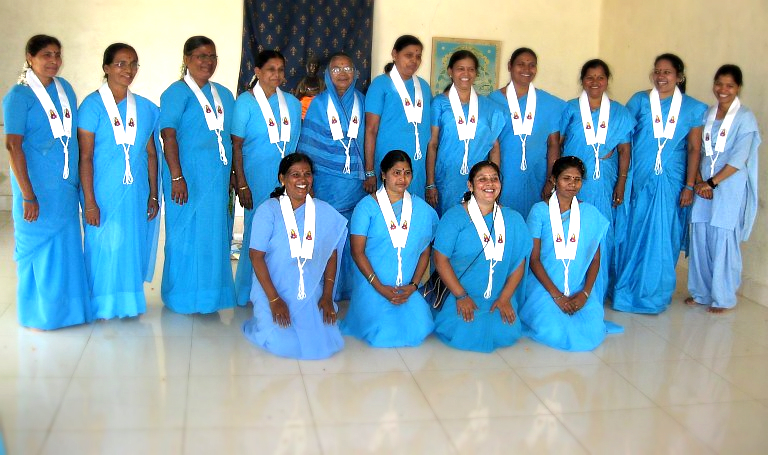
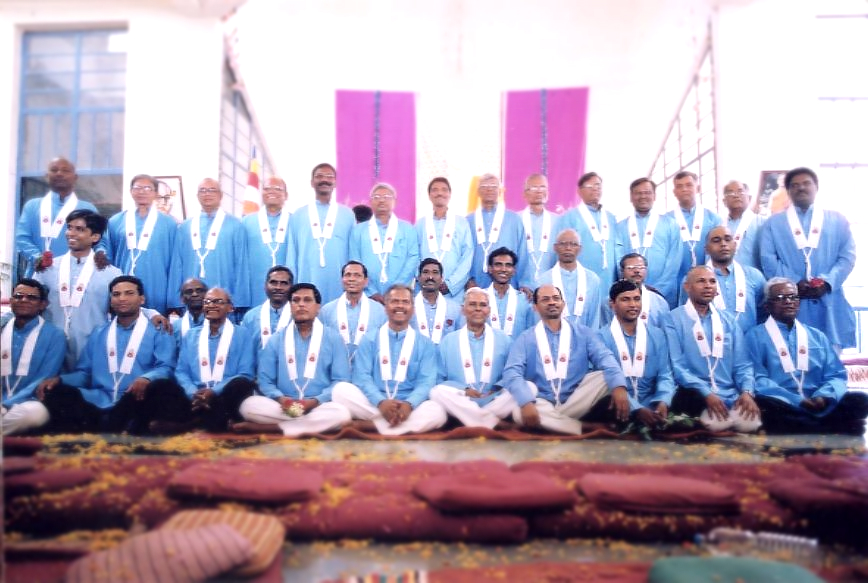
The Triratna Buddhist Order is a spiritual community of people who have pledged themselves to following the Buddhist path to Enlightenment. Order Members have made that commitment – traditionally known as Going for Refuge to the Buddha, Dharma, and Sangha – the central point of their lives. In particular, they have chosen to make the Triratna Buddhist Order the context in which they are trying to live ever more deeply imbued by Wisdom and Compassion.
The Order aims to be a free association of individuals working towards a common goal. It is founded on the principle that spiritual community can be created only by free will and mutual aspiration, never by coercion. Therefore there are no rules in the Order, and all decisions made by bodies within the Order are made by consensus.
Every Order Member undertakes to practise a traditional set of ten ethical precepts. These point to basic principles applied to all actions of body, speech and mind. All Order Members take the same precepts, and practise on an equal basis.
The Triratna Buddhist Order is a radical alternative to most forms of Buddhism in Asia, where practitioners are either monastic or lay. Our Order is open to anyone – regardless of race, sexual orientation, or gender identification – who is sincerely and effectively committed to the Buddhist path. Order members try to lead a wholehearted Buddhist life, bring a dharmic perspective to all aspects of their life. They are not monks or nuns. What matters is not the lifestyle that Order members adopt but the spiritual commitment they have made: commitment is primary, lifestyle is secondary.
What happens in the triratna buddhist order?
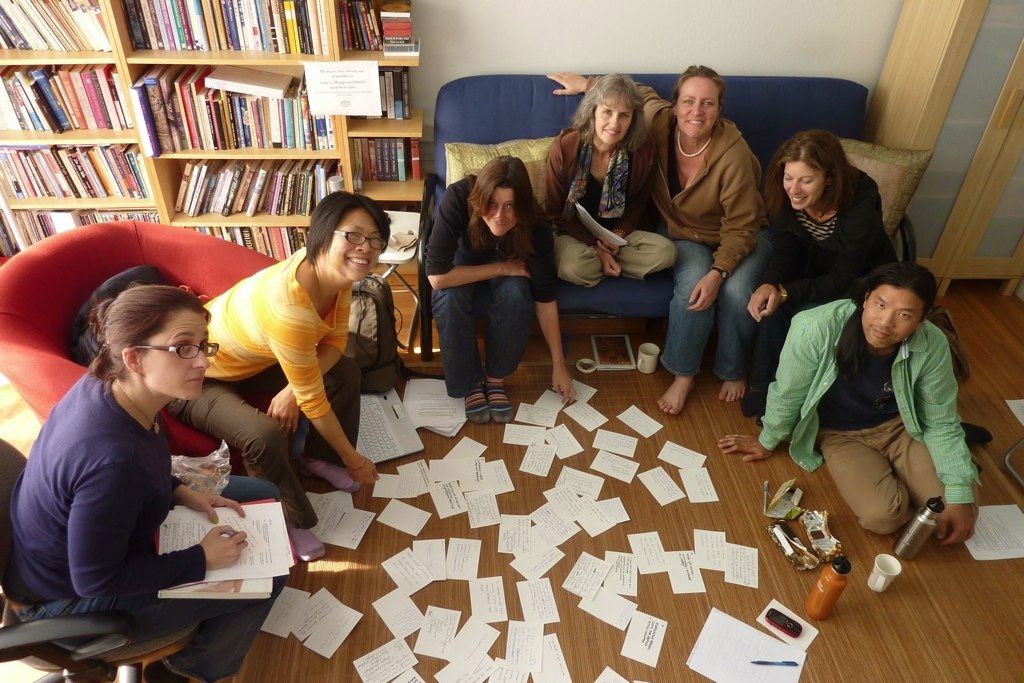
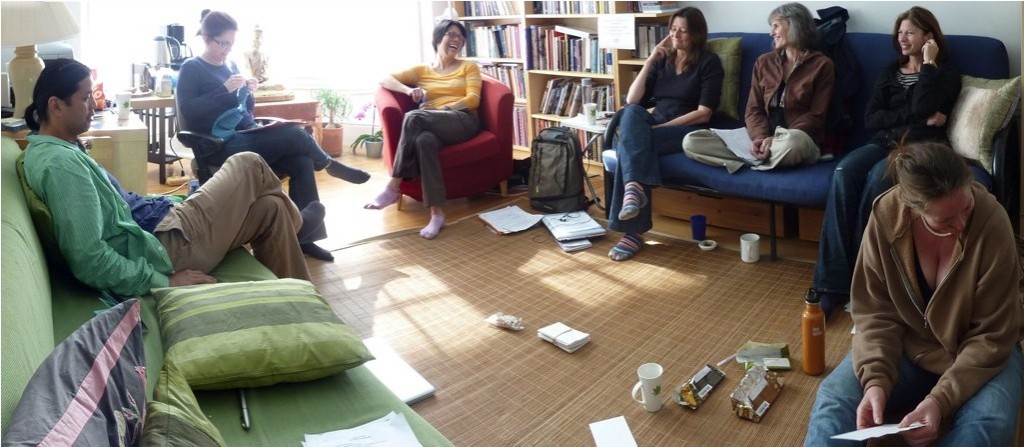
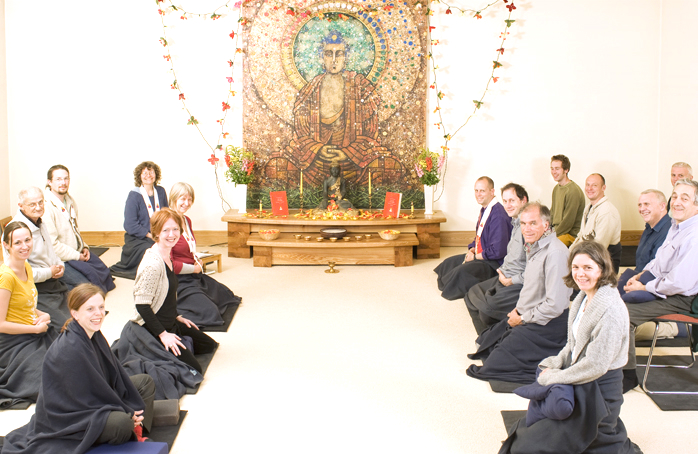
Members of the Order take seriously the task of deepening spiritual fellowship, so there are many opportunities for them to spend time together and form supportive friendships. Order Members get together each week in small local groupings called chapters. These are spiritual workshops, where people share their insights and difficulties and try to help each other in their Dharma practice. On the first weekend of every month the members of the Order in any region meet up for a weekend of collective Dharma practice. And every two years there is a three-week Convention of the whole Order, with members gathering from all around the world.Some Order Members live together, others may work together. Most Order Members have ordinary jobs, expressing their values in a range of professions
and vocations. A minority work full-time in Buddhist Right Livelihood businesses, or are supported to work at their local Triratna centre. In whatever ways they try to share their spiritual lives, and to co-operate in the various means through which the Order takes what it has to offer into the world. All of its structures aim to facilitate communication, and create a basis of kindness and clarity on which the Order can meet and work.
Joining the order
The Triratna Buddhist Order has around 2,500 members in 27 countries worldwide. Ordination is a lifelong commitment, and a very serious step, so it usually takes a number of years to become ready for ordination. Anyone can ask for ordination, and can then participate in the structures and retreats that make up the ordination training course. A range of retreats are held around the world by Order Members experienced in ordination training.
As the senior Order Members responsible for ordinations, and Order Members at their local Triratna centre, get to know the person who has asked, they will discuss their readiness for ordination. Nobody is ever refused ordination, but people take varying amounts of time to prepare themselves.
Ordination is a commitment that requires a fair degree of self-knowledge as well as considerable experience of the Buddhist path, of the Triratna Buddhist Community, and of effective friendships with Order Members. Ordinations are performed by a senior Order Member known as a Preceptor, usually in the context of a special ordination retreat.
The Triratna sangha is open to all those who wish to practise Buddhism within its community or who are sympathetic to our approach. Most people encounter Triratna through a meditation class at a Triratna centre. Everyone who has contact with Triratna is considered a friend. However someone who wants to make a particular connection with the Triratna Buddhist Community and develop friendships with members of the Order can ask to become a Mitra (which simply means ‘friend’ in Sanskrit).
The Mitra community
In this context, a Mitra is someone who is actively involved in Triratna activities, and intends to continue practising the Dharma in this community. Becoming a Mitra marks a deepening of commitment. And, as far as possible, Order Members try to ensure that the spiritual needs of Mitras are met. There are special activities, including specific retreats, and study groups which follow a four-year course, covering the key aspects of the Buddha’s teaching and
Sangharakshita’s approach to it. People ask to become a Mitra when they:
3. Believe that the Triratna Buddhist Community is the appropriate spiritual community for them.
Once a person’s request to be a Mitra has been accepted, they take part in a simple ceremony. This ritual is acknowledged by all Order Members. Wherever they go throughout the world, at all Triratna centres, they will be acknowledged as a Mitra, and mitra activities will be open to them.
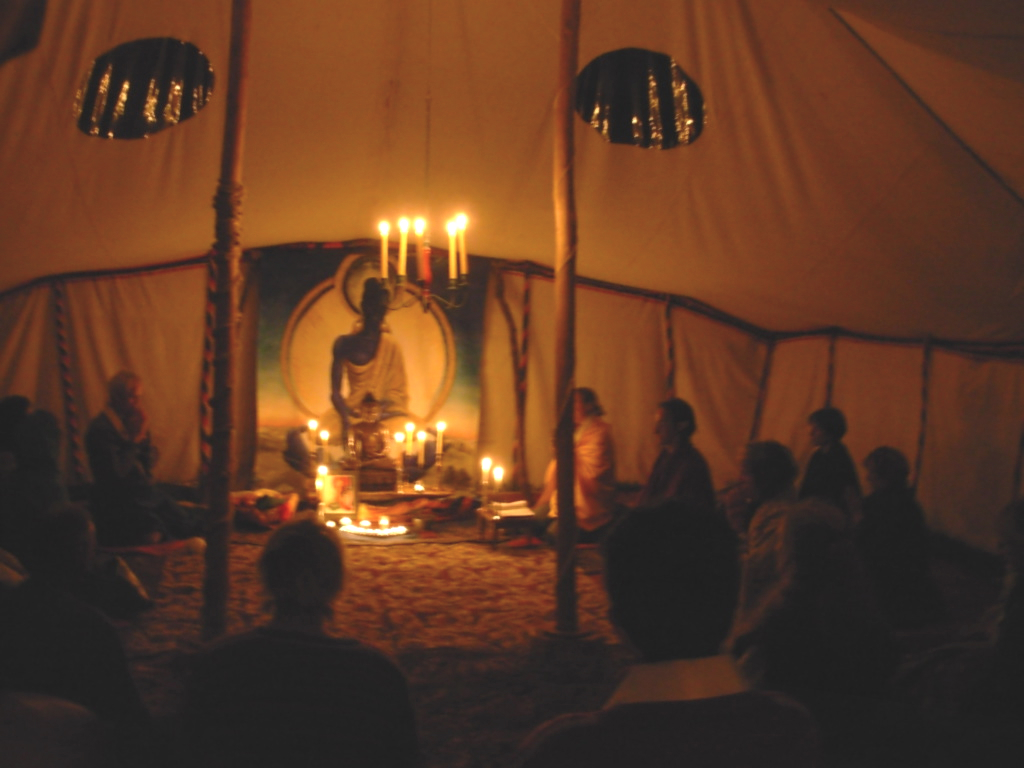
Down the centuries there has been a strong tradition among Buddhists of going on retreat in quiet, secluded places. In the Buddha’s day a cave or even the roots of a shady tree in the jungle were often the location. During the three-month rainy season the Buddha recommended that his followers stay in one place and meditate more intensely. And over time buildings were erected to house the disciples during this period of retreat. Today there is still a great value in stepping back from worldly concerns and duties and leading a simple, focused life for a while. Retreats in the countryside are an opportunity to take meditation and reflection further; perhaps to study the Dharma or experience extended periods of silence. Retreats can be any length of time – from a weekend to a couple of months or more. There are around 17 retreat venues within the Triratna Buddhist Community. Most run a wide variety of retreats throughout the year exploring Buddhism, Buddhist meditation, ritual and yoga. Some retreat centres also run specific events which promote well being – such as tai chi, shiatsu, massage, or the Arts (for example, meditation and writing,
painting, photography, singing, etc.). Individual centres and groups also hire venues for particular events.
See program details and book now for all eight Triratna Buddhist Retreat Centres in the UK: Going on Retreat.
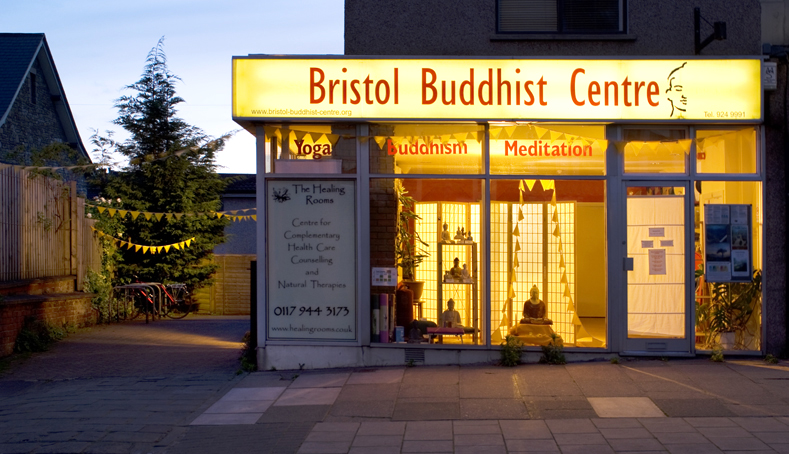
Triratna Centres teach meditation and Buddhism through classes and courses. Teaching in Triratna is done by members of the Triratna Buddhist Order who are themselves experienced in the practice and study of meditation and Buddhism.
There is no expectation that people attending the centre will be Buddhists, nor that they will agree with Buddhist teachings. Classes are an opportunity to learn and test out Buddhist practices in the light of one’s own experience, and in an atmosphere of friendly, encouraging, open communication.
For details on Triratna Centre locations worldwide and other activities, see our find us section.
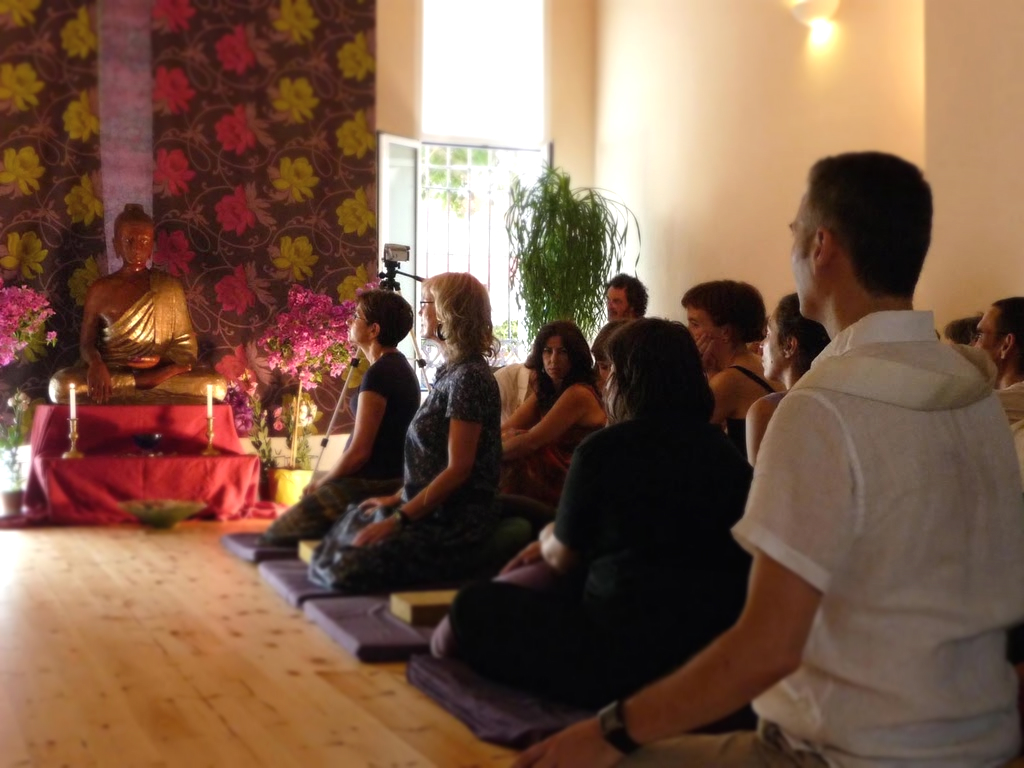
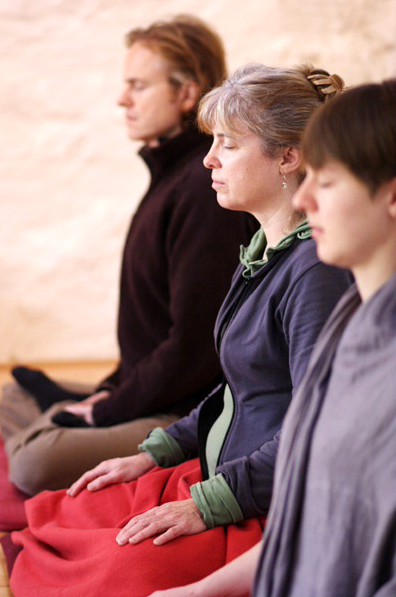
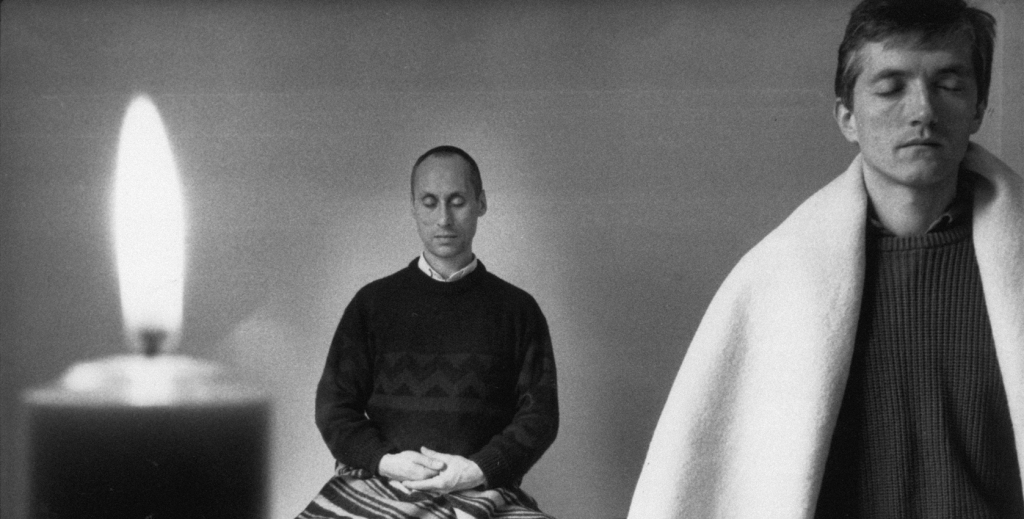
Open classes are the best brief introduction to meditation. The programme of the evening varies from centre to centre and from week to week, but all the classes teach two basic meditation practices: mindfulness of breathing and the
development of loving-kindness. As well as this there may be a talk on an aspect of meditation or Buddhism; time to ask questions and share your experiences in small discussion groups; or another activity, such as walking meditation, which supports the main practice.
Meditation courses
Various levels of meditation courses give a thorough grounding in the principles and practices of meditation. As well as simply learning the basic techniques of meditation, the Buddhist tradition has a great deal to say about how to work with those techniques, how to address difficulties, what the benefits of meditation practice can be, and how meditation relates to daily life.
Buddhism courses
Buddhism courses cover the principles and practices of basic Buddhism. By looking at the human situation from the Buddhist perspective one learns to live with greater awareness, ethical sensitivity, and friendliness. The courses
involve not just theory, but metaphor, myth, and the practical implications of the Buddhist view of life.
Day events and weekend retreats
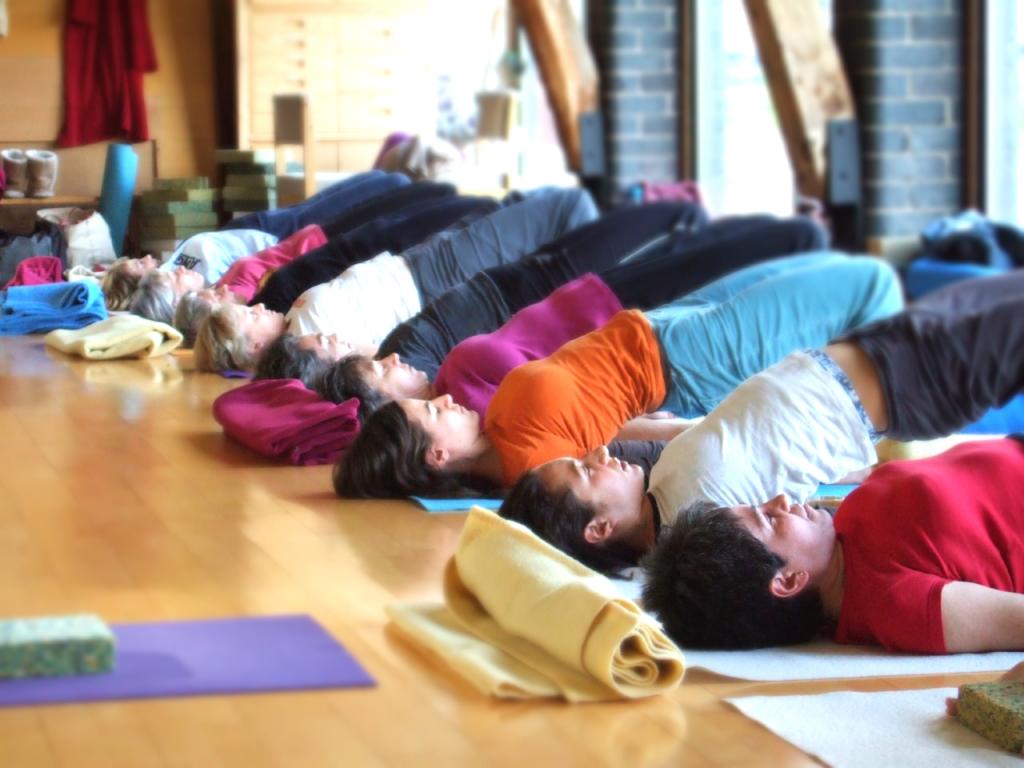
Triratna Centres also provide a range of activities at weekends, from intensive meditation days, to study days or workshops on aspects of the Arts. As well as these activities, Buddhist centres often also offer health and bodywork classes, such as T’ai Chi or yoga.
Contact your nearest centre to find out what classes they offer.
Buddhism will not really be established in the West until it learns to speak the language of Western culture. (Sangharakshita)
Sangharakshita has tried to distinguish between those elements of Buddhism in Asia that are fundamental and universal, and those which are concerned with a particular region. However, this does not mean that cultural expression is unimportant. Buddhism is not an abstract philosophy; it addresses the emotions as well as the intellect and offers the basis for new understandings of the world, and even new mythologies. He believes that western Buddhists need to create a new Buddhist culture that is genuinely Buddhist, yet speaks the language of western culture. This is a daunting challenge, as both western culture and Buddhism are vast and hugely varied. Yet he suggests that a key to engaging with both as an aspect of the Buddhist path is through the imagination. This means perceiving life in its wholeness with both reason and emotion, and through images and metaphor – as is the case
in the Arts. Imagination is a faculty that can be developed and refined, and can be connected with the traditional Buddhist faculties of faith and wisdom: ways of experiencing that go far beyond concepts or feelings.
Appreciation and practice of the Arts is seen within our community as an important means of engaging the emotions in the spiritual life and of making a bridge between traditional Buddhism and Western culture. The Buddhist perspective creates a standpoint from which to develop a consistent critique of western art. At the same time, some of the greatest western artists, poets, and writers have had intuitions of the higher states to which Buddhist practice leads.
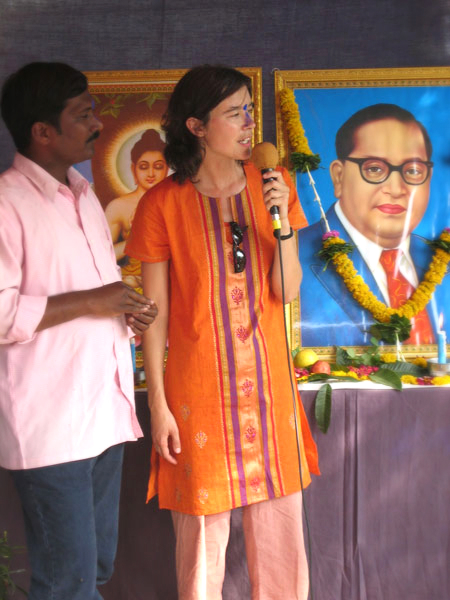
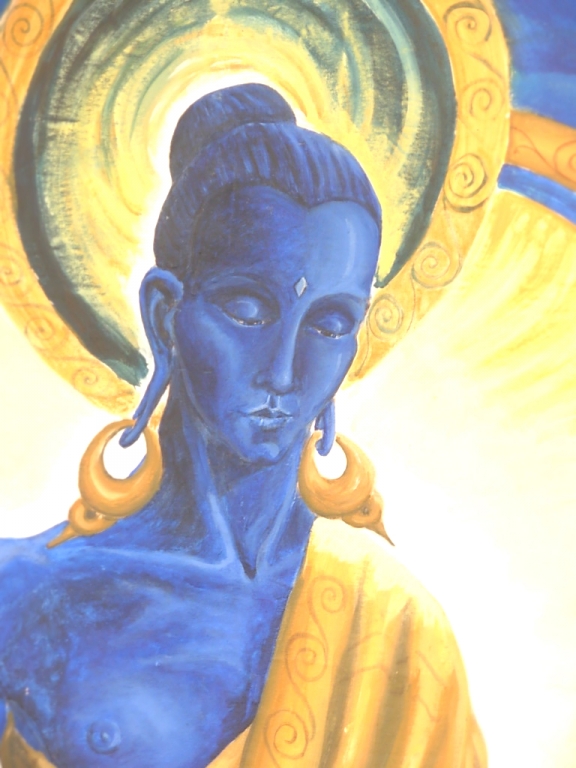
There are many working artists, musicians, and writers practising within the Triratna Buddhist Community. Some produce traditional Buddhist images, which are gradually becoming more western in appearance and ‘feel’; others are working within the western traditions. In recent years this has resulted in the production of a number of plays and musical works, retreats devoted to the arts, and two Buddhist arts centres in the UK. Urthona magazine is devoted to exploring the arts from a Buddhist perspective, and in India the Asvagosha Project successfully took the Dharma
to people in the villages by way of street drama, songs, and storytelling.
In accounts of the life of the Buddha, there are many examples of people immediately understanding his teaching and breaking the first three ‘fetters’ that hinder people from seeing Reality. These fetters are: having a fixed view of oneself; doubt; and being attached to rites and rituals as ends in themselves. Such people become ‘stream entrants’ – because they have entered a stream of understanding that draws them irresistibly towards Enlightenment.
Over the centuries there has been a tendency to emphasise the difficulty of making such a breakthrough, and some Buddhist schools teach that it may take many lifetimes, or even that it’s no longer possible. Sangharakshita has a different understanding. He suggests that all sincere, committed and effective Dharma practitioners, who have supportive conditions and enough time, could reasonably expect to make substantial progress and even gain Stream Entry in this lifetime. He stresses that such attainment needn’t be seen as extremely rare within an effective sangha.
The figure of the Bodhisattva — one who seeks Enlightenment for the sake of all beings — is central to Mahayana Buddhism. The Bodhisattva Ideal lays special emphasis on compassion as essential to the Buddhist path. Drawing on all aspects of the Buddhist tradition, Sangharakshita’s main emphasis is on the earlier and most basic teachings of the Buddha (which precede the Mahayana). However, he suggests that the Bodhisattva ideal is a central aspect of Buddhism as a whole, and that its expression by the Mahayana is not a later development but the reassertion of something that was implicit in the Buddha’s teaching from beginning. Transcendental Wisdom necessarily includes Compassion.
Sangharakshita maintains that Compassion is an essential aspect of the principle of going for Refuge to the Buddha, Dharma and Sangha. The Bodhisattva Ideal expresses its altruistic dimension.
Buddhism has come to the West through books, ideas, art, and meditation practice. Sangharakshita emphasises a vital dimension that has been rather neglected in some quarters: human communication and friendship. Community and friendship is all the more important as western society becomes increasingly fragmented – with so many people living isolated from one another, whether in ‘nuclear’ families, or as individuals living alone.
Sangharakshita maintains that in practising Buddhism we need other people to learn from. Buddhism, he argues is best ‘caught’ not taught. He believes that our relationships with teachers and fellow practitioners must be characterised by honesty and clear communication. He also stresses the value of friendships with peers, in particular having at least one friend (not a lover) with whom we can be intimate and completely open.
Through friendship we have the opportunity to develop the virtues of generosity, compassion, patience and forgiveness. Sangharakshita would like spiritual community – particularly the Order he himself founded – to be a ‘network of friendships’. This teaching has many practical consequences within the Triratna Buddhist Community.
We put a lot of effort into learning the art of effective communication, developing and deepening friendships with other individuals, and befriending those who are just starting out on the Buddhist path.